About 147 minutes
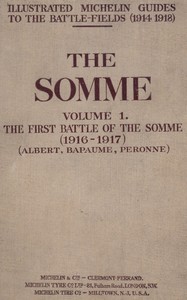
The Somme, Volume 1. The First Battle of the Somme (1916-1917) (Albert, Bapaume, Péronne) — Inside the Classic
World Events
33,608 recorded words. 0 minutes difference from this book's estimate.
View Gutenberg source #49122
For From Convent to Conflict; Or, A Nun's Account of the Invasion of Belgium — Context and Discussion, the stored edition analysis reports 33,764 words, 2 hr 27 min estimated reading time, and 23 detected text sections.
The text analysis averages about 23.1 words per sentence, while the detected sections provide another way to judge how the source is divided.
Project Gutenberg metadata also associates the work with “World War, 1914-1918 -- Campaigns -- Belgium,” connecting these edition facts with the source record’s subject description.
Explore this collection
These alternatives are selected using recorded categories and estimated reading time.
About 147 minutes
World Events
33,608 recorded words. 0 minutes difference from this book's estimate.
View Gutenberg source #49122About 146 minutes
World Events
33,505 recorded words. 1 minutes difference from this book's estimate.
View Gutenberg source #65761About 142 minutes
World Events
32,491 recorded words. 5 minutes difference from this book's estimate.
View Gutenberg source #52656Search stored excerpts and compare books → Choose by your preferences →
Choices use stored catalog measurements. Estimates vary with reading speed. A shared category is a catalog label, not a claim that two books have the same argument or literary quality.
Search reads excerpt text stored with this catalog and links to its associated Gutenberg record. The connection is stored in the site database; this tool does not recheck that every excerpt is word-for-word identical to that external record. Excerpt search does not cover every chapter and does not verify historical publication dates.
Catalog snapshot checked: 2026-09-25. Coverage: 91 public books, 91 available source excerpts.
Read the complete public-domain text at its original source.
Read on Project GutenbergSister Marie Antoine opens her account not with a declaration of war but with the mundane disruption of convent routine. The first signs of conflict appear in the altered behavior of the townspeople and the sudden scarcity of goods. Her prose is deliberately plain, avoiding the rhetorical flourishes common in wartime propaganda. Instead, she records what she sees: families loading carts with hay and straw, former pupils among the refugees, and the nightly chill that made sleeping in the open dangerous. The authorial choice to foreground these concrete details over grand historical claims gives the narrative an unsettling intimacy.
The author’s diction shifts noticeably when describing the refugee columns. She uses verbs of motion—touched, fled, chased—that emphasize involuntary movement. People are not traveling but being war-chased. The word forsaken recurs, applied to homes, parents, and even the canal that was to be opened with festivities. This lexical choice frames displacement as a loss of both place and future. The canal, a symbol of peacetime progress, becomes a makeshift shelter. By juxtaposing the planned celebration with the actual scene of refugees in its bed, Antoine underscores how war cancels ordinary time.
A striking feature of the narrative is its attention to administrative obstacles. Antoine describes the passport system in detail: documents had to bear a portrait sealed by the Burgomaster, and could only be used in the issuing vicinity. This focus on paperwork might seem dry, but it reveals how the invasion transformed everyday movement into a controlled, suspicious act. The author’s own journey to the United States was authorized by a formal letter from her Superior, countersigned by Cardinal Mercier. The inclusion of this document in the text suggests that for a nun, legitimacy depended on institutional permission even in crisis.
Antoine’s convent is not a refuge but a sieve through which desperate people pass. She records that the Sisters were besieged by hundreds of refugees seeking shelter in the church or schools, which were already full. The verb besieged echoes the military context, blurring the line between combatants and civilians. The author’s voice remains observational, but the accumulation of details—the crying children, the lost parents, the cattle shot or taken—creates a cumulative effect of helplessness. The convent’s resources are inadequate, and the narrative does not pretend otherwise.
In the closing pages of the excerpt, Antoine shifts from observation to moral commentary. She contrasts American relief efforts with the continued supply of weapons to belligerents, calling it a lasting reproach. Her metaphor of firemen fighting a blaze while others pour on oil is blunt and effective. The phrase There is no pocket in a shroud echoes a folk proverb, grounding her critique in common wisdom rather than political theory. This section reveals the author’s dual role as witness and advocate, using her platform to condemn profiteering even as she thanks American women for aid.
Antoine’s account is necessarily partial. She does not describe battles or military strategy; her view is restricted to what a nun in Willebroeck could see. The excerpts contain no German soldiers as individuals—only the effects of their presence. This limitation is not a flaw but a deliberate framing. By staying within her own perspective, Antoine produces a document that is both a primary source and a meditation on what it means to witness war from a cloistered position. The reader is left to infer the larger conflict from its domestic aftermath.
Sister Marie Antoine’s narrative is best read as a document of civilian experience, not a military history. Pay attention to the small details: the hay in the wagons, the sealed passports, the canal bed turned into a dormitory. These are the author’s evidence, and they carry more weight than any declaration of patriotism. The book’s value lies in its refusal to look away from the ordinary people—the former pupils, the crying children, the scattered community—who are the true subjects of war.
There’s something about Sister Marie Antoine’s quiet watching—the convent bell marking hours while the world outside unravels—that stays with me. It made me think of another overlooked corner of that same war, the small craft darting through the shallows. I found myself returning to The Mosquito Fleet — A Closer Reading, just to sit with that patient attention a little longer.
Save your reaction, strongest insight, and memorable passage.