About 135 minutes
The Square Jaw — Story, Setting & Ideas
World Events
30,821 recorded words. 2 minutes difference from this book's estimate.
View Gutenberg source #48592
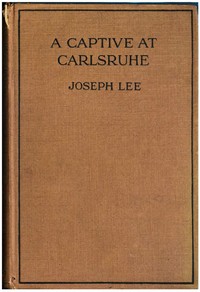
The source record for A Captive at Carlsruhe and Other German Prison Camps — Inside the Classic measures this digital text at 30,411 words, 2 hr 13 min estimated reading time, and 19 detected text sections.
The text analysis averages about 22.8 words per sentence, while the detected sections provide another way to judge how the source is divided.
Project Gutenberg metadata also associates the work with “World War, 1914-1918 -- Personal narratives, British,” connecting these edition facts with the source record’s subject description.
Explore this collection
These alternatives are selected using recorded categories and estimated reading time.
About 135 minutes
World Events
30,821 recorded words. 2 minutes difference from this book's estimate.
View Gutenberg source #48592About 135 minutes
World Events
30,891 recorded words. 2 minutes difference from this book's estimate.
View Gutenberg source #53762About 137 minutes
World Events
31,314 recorded words. 4 minutes difference from this book's estimate.
View Gutenberg source #51523Search stored excerpts and compare books → Choose by your preferences →
Choices use stored catalog measurements. Estimates vary with reading speed. A shared category is a catalog label, not a claim that two books have the same argument or literary quality.
Search reads excerpt text stored with this catalog and links to its associated Gutenberg record. The connection is stored in the site database; this tool does not recheck that every excerpt is word-for-word identical to that external record. Excerpt search does not cover every chapter and does not verify historical publication dates.
Catalog snapshot checked: 2026-09-25. Coverage: 91 public books, 91 available source excerpts.
Read the complete public-domain text at its original source.
Read on Project GutenbergJoseph Lee’s A Captive at Carlsruhe and Other German Prison Camps (1920) is a memoir of his time as a British prisoner of war in Germany during World War I. The catalog subjects—personal narratives and prisoners and prisons—accurately describe the content, but the excerpts reveal a work less concerned with suffering or escape than with the routines, characters, and small dramas of camp life. Lee, also an artist, includes his own illustrations, and the text is punctuated by sketches of fellow prisoners, German guards, and the landscapes glimpsed during transfers.
The excerpts contain no descriptions of battle or capture. Lee’s narrative begins with his arrival at Carlsruhe camp and proceeds through daily events: meals, entertainments, and interactions with other prisoners. The table of contents lists chapters on “The camp theatre,” “A lecture on Abyssinia,” and “The Debating Society.” This suggests a work focused on the social and cultural life of the camp rather than on military or political analysis. Lee’s tone is often wry or detached, as when he notes that a fellow prisoner’s comment—“Lee’s happy,” because he’s “got an old castle to sketch!”—captures his own priorities.
Lee’s observations are precise and often unexpected. On the journey from Carlsruhe to Beeskow, he notes that “every second woman seemed to bear upon her back—besides the apparent burden of the war—a basket; every third man a rucksack.” He describes the landscape with an artist’s eye: “brown boles of fir and pine, with, hidden in their duskiness, the white stems of the silver birch, like flashes of summer lightning.” At Beeskow, he records the arrival of prisoners as a spectacle for local children, who “had obviously expected much more of monstrosity and oddity than was forthcoming.” These details give the memoir a documentary texture that goes beyond the generic category of “prisoner narrative.”
Lee’s role as the book’s illustrator is not incidental. The excerpts mention “numerous illustrations by the author” on the title page, and the text itself refers to his sketching: “A ‘verboten’ sketch” is a chapter heading, and he describes drawing the commandant and the camp. His visual sensibility shapes the prose, which often frames scenes as tableaux. The final vision of Carlsruhe camp includes “Maggiore Tuzzi, with a look of settled melancholy upon his face, and Capitaine Teixeira, standing aloof, with his hand upon his heart.” This blend of verbal and visual portraiture is a distinctive feature of the work, though the excerpts do not reveal how the illustrations function in the complete book.
Readers approaching A Captive at Carlsruhe should expect a memoir that values anecdote and atmosphere over plot. Lee’s account is less a chronicle of hardship than a record of how prisoners filled their days—through theatre, debate, and observation of the German landscape. The illustrations, though not reproduced here, are integral to this vision. The book offers a specific, often understated perspective on captivity, one that rewards attention to its small, telling details.
The rain kept time with my turning of Joseph Lee’s pages, his sketches of muddy yards and quiet men making the war feel close yet oddly gentle. That same strange intimacy surfaced later in a surgeon’s memoir I found nearby, A Surgeon in Arms — Background and Themes, where wounds are mended, not fought. Both books left me listening to thunder differently.
A brief reflection can help important ideas stay with you longer.