About 97 minutes
A Sketch of the 29th Regiment of Connecticut Colored Troops — Background and Themes
Modern Nations
22,188 recorded words. 9 minutes difference from this book's estimate.
View Gutenberg source #60700
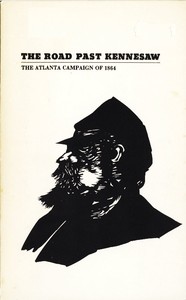
The Road Past Kennesaw: The Atlanta Campaign of 1864 — Edition Insights can be approached with a clearer sense of reading commitment from its source measurements: 20,097 words, 1 hr 28 min estimated reading time, and 3 detected text sections.
The text analysis averages about 19.9 words per sentence, while the detected sections provide another way to judge how the source is divided.
Project Gutenberg metadata also associates the work with “United States -- History -- Civil War, 1861-1865 -- Campaigns,” connecting these edition facts with the source record’s subject description.
Explore this collection
These alternatives are selected using recorded categories and estimated reading time.
About 97 minutes
Modern Nations
22,188 recorded words. 9 minutes difference from this book's estimate.
View Gutenberg source #60700About 77 minutes
Modern Nations
17,579 recorded words. 11 minutes difference from this book's estimate.
View Gutenberg source #53814About 73 minutes
Modern Nations
16,729 recorded words. 15 minutes difference from this book's estimate.
View Gutenberg source #48754Search stored excerpts and compare books → Choose by your preferences →
Choices use stored catalog measurements. Estimates vary with reading speed. A shared category is a catalog label, not a claim that two books have the same argument or literary quality.
Search reads excerpt text stored with this catalog and links to its associated Gutenberg record. The connection is stored in the site database; this tool does not recheck that every excerpt is word-for-word identical to that external record. Excerpt search does not cover every chapter and does not verify historical publication dates.
Catalog snapshot checked: 2026-09-25. Coverage: 91 public books, 91 available source excerpts.
Read the complete public-domain text at its original source.
Read on Project GutenbergRichard M. McMurry’s account of the 1864 Atlanta Campaign, published by the National Park Service, treats the struggle for Atlanta as a nearly continuous battle rather than a series of discrete engagements. The text emphasizes that soldiers endured not only enemy fire but also extreme weather, poor clothing, and vermin. One Texan’s joke about uniform holes marking rank—a captain having one hole, a lieutenant two, and a private none—captures the blend of humor and deprivation that pervades the narrative. McMurry also highlights the campaign’s reliance on railroads and the widespread use of field fortifications, which by the third or fourth week had become a mastered art.
The Atlanta Campaign, as McMurry presents it, was unusual for its relentless pressure. Unlike many Civil War operations where fighting occurred at infrequent intervals, here the armies were rarely free from the sounds and dangers of combat. The text notes that at Resaca nearly all forces were engaged, while at other times action was limited to skirmishers’ fire. This constant exposure wore down soldiers physically and mentally. The weather compounded the strain: a freak cold wave in mid-June, heavy rains in late May and June, and the normal heat of July and August all hampered movements. On July 12, the heat was so severe that only 50 men from an Illinois regiment could complete a three-mile march. Such details ground the campaign in the soldiers’ bodily experience.
McMurry describes how the campaign saw the development of trench warfare on a large scale. Soldiers built protective works from whatever was at hand: loose rocks, fence rails, tombstones, or even the bodies of dead comrades. By the third or fourth week, both sides had mastered field fortification—a trench with dirt piled toward the enemy, surmounted by a headlog with small firing openings. The text states that such works left “little but the eyes ... exposed” to enemy fire. In front of the trenches, underbrush was cleared and young trees cut so they fell toward the foe, left partly attached to stumps to prevent removal. Telegraph wire was sometimes strung between them as an additional obstacle. These improvised defenses reflect the campaign’s brutal pragmatism.
The narrative devotes significant attention to the soldiers’ daily struggles beyond combat. Body lice and other vermin affected almost all men; soldiers pinned down in water-filled trenches consoled themselves that they were at least drowning the lice. Federals complained that retreating Southerners infested the country with lice that attacked advancing Northerners. Other pests included chiggers, ticks, snakes, scorpions, flies, and ants. Clothing was a persistent problem: Sherman’s men were better supplied but their wool uniforms were unsuited to the Georgia summer, while Confederates had almost no new clothing after the campaign began. Food shortages forced soldiers to supplement rations with whatever could be taken from farms—corn, pork, chickens, geese, hams, potatoes, apples, and onions. One Federal wrote, “most of the time we are on the move and cannot get such as is fit for a man to eat.”
Readers should note that McMurry’s study is concise—about 20,000 words—and draws on official records and soldier accounts. The foreword by Bell Irvin Wiley frames the campaign as a turning point, but the text itself stays close to the ground, detailing how men coped with mud, heat, lice, and constant threat. Pay attention to the recurring contrast between the strategic prize—Atlanta, a railroad hub—and the squalid, exhausting reality of the soldiers who pursued it.
Reading again about the endless trenches at Kennesaw—the heat, the lice, the sheer weariness of men digging and shooting day after day—my mind drifted to another war’s grinding monotony. The same exhaustion seemed to hang in the air there, too, in that other campaign’s dusty fields. There is a quiet familiarity in such distant suffering, a thread I found again in The Russian Campaign, April to August, 1915 Being the Second Volume of "Field Notes from the Russian Front" — Edition Insights.
Save your reaction, strongest insight, and memorable passage.