About 198 minutes
Imperialism and Mr. Gladstone (1876-1887) — A Closer Reading
Modern Nations
45,468 recorded words. 12 minutes difference from this book's estimate.
View Gutenberg source #53354
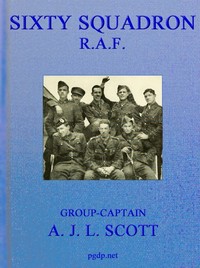
For Sixty Squadron R.A.F.: A History of the Squadron from its Formation — Text and Context, the stored edition analysis reports 42,554 words, 3 hr 6 min estimated reading time, and 8 detected text sections.
The text analysis averages about 16.7 words per sentence, while the detected sections provide another way to judge how the source is divided.
Project Gutenberg metadata also associates the work with “World War, 1914-1918 -- Regimental histories -- Great Britain,” connecting these edition facts with the source record’s subject description.
Explore this collection
These alternatives are selected using recorded categories and estimated reading time.
About 198 minutes
Modern Nations
45,468 recorded words. 12 minutes difference from this book's estimate.
View Gutenberg source #53354About 167 minutes
Modern Nations
38,395 recorded words. 19 minutes difference from this book's estimate.
View Gutenberg source #50716About 213 minutes
Modern Nations
48,836 recorded words. 27 minutes difference from this book's estimate.
View Gutenberg source #49350Search stored excerpts and compare books → Choose by your preferences →
Choices use stored catalog measurements. Estimates vary with reading speed. A shared category is a catalog label, not a claim that two books have the same argument or literary quality.
Search reads excerpt text stored with this catalog and links to its associated Gutenberg record. The connection is stored in the site database; this tool does not recheck that every excerpt is word-for-word identical to that external record. Excerpt search does not cover every chapter and does not verify historical publication dates.
Catalog snapshot checked: 2026-09-25. Coverage: 91 public books, 91 available source excerpts.
Read the complete public-domain text at its original source.
Read on Project GutenbergThis history of No. 60 Squadron, Royal Flying Corps (later Royal Air Force) is unusual in its reliance on firsthand letters and diaries alongside official records. The excerpts show a narrative that moves between aerial combat and the mundane rhythms of camp life: pilots waiting for flights, the mess acquiring pigs and hens, and Chinese laborers employed around the aerodrome. The preface by Lord Hugh Cecil frames the squadron’s work as part of the rapid specialization of air power, from general reconnaissance to dedicated fighting scouts. But the text itself often dwells on the ground—on lost aerodromes, cobbled squares, and the problem of keeping one’s footing on a dark night.
The excerpts repeatedly emphasize waiting. A pilot writes of “waiting, waiting, waiting for a flight” over several days, and after a brief practice flight he loses sight of the aerodrome, following another machine east toward the front. The tension between the desire to fly and the reality of delays is a persistent thread. The narrative does not skip from action to action; it records the frustration of a “temporary shortage of machines” and the anticlimax of a first flight that ends in confusion. This attention to downtime—to the boredom and uncertainty that precede combat—gives the history a texture absent from more polished accounts.
The letters include observations that have little to do with flying. The squadron’s phonograph draws a crowd of Chinese laborers, who are kept out by a sign painted in Chinese characters. The mess boasts five dogs, and the squadron as a whole sixteen canines, along with six pigs and twenty-five hens—enough for a steady supply of eggs. Moving picture shows are held in a Church Army hut. These details are not decorative; they anchor the narrative in a specific material world. The author records the presence of Chinese coolies in blue padded uniforms, the use of caterpillar tractors to haul howitzers, and the cobbled streets of a nearby town. Such observations suggest a history attentive to the full social and sensory environment of the squadron.
A striking passage describes a pilot recognizing a town from a “great relief map” studied at Oxford—a town reduced to “shell-holes in all directions” and “practically all the buildings in ruins.” The contrast between the abstract map and the actual desolation is sharp. The pilot notes that a shell bursts “with a blinding flash” but that he could “hear nothing of the explosion.” This detail—soundless violence observed from the cockpit—captures the peculiar sensory isolation of early air combat. The narrative does not dwell on the horror; it moves on to the relief of finding the way back to the aerodrome. The episode exemplifies how the history juxtaposes technical training with the reality of destruction, often in understated prose.
Beyond combat, the excerpts reveal a squadron deeply engaged in the social and political currents of the war. Canadian pilots discuss the coming general election, with authorities “openly urging everyone to vote against Laurier.” The mess acquires a phonograph that attracts Chinese laborers, and the interpreter paints a sign in Chinese to keep them out. Dogs, pigs, and hens are counted with pride. Moving picture shows provide nightly entertainment. These details, drawn from letters home, show a community trying to maintain normalcy amid the disruption of war. The history does not separate the fighting from the living; it presents them as intertwined, with the same matter-of-fact tone applied to both.
Readers should approach this history as a composite document, one that mixes official records with personal correspondence. The letters are not retrospective analyses but immediate impressions, and their inclusion gives the narrative a provisional, day-to-day quality. The book rewards attention to its margins—the asides about dogs, phonographs, and lost pilots—as much as to its set-piece actions. It is a history that, in its accumulation of small details, offers a fuller picture of what it meant to serve in a scout squadron than any purely operational account could.
I finished Sixty Squadron R.A.F. the other evening, and something about the letters home stayed with me—the way loss and ordinary days sit so close together. It made me think of how we piece together truth from fragments, and then I stumbled on A searchlight on Germany: Germany's Blunders, Crimes and Punishment — Reading Notes. That same quiet ache, the effort to understand what happened, lingers there too.
Answer a few questions and save a private reflection on this device.