About 186 minutes
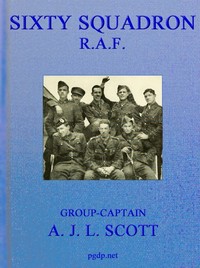
Sixty Squadron R.A.F.: A History of the Squadron from its Formation — Text and Context
Modern Nations
42,554 recorded words. 12 minutes difference from this book's estimate.
View Gutenberg source #47416
Before opening Imperialism and Mr. Gladstone (1876-1887) — A Closer Reading, the edition data offers a quick orientation: 45,468 words, 3 hr 18 min estimated reading time, and 5 detected text sections.
The text analysis averages about 21.4 words per sentence, while the detected sections provide another way to judge how the source is divided.
Project Gutenberg metadata also associates the work with “Gladstone, W. E. (William Ewart), 1809-1898,” connecting these edition facts with the source record’s subject description.
Explore this collection
These alternatives are selected using recorded categories and estimated reading time.
About 186 minutes
Modern Nations
42,554 recorded words. 12 minutes difference from this book's estimate.
View Gutenberg source #47416About 213 minutes
Modern Nations
48,836 recorded words. 15 minutes difference from this book's estimate.
View Gutenberg source #49350About 167 minutes
Modern Nations
38,395 recorded words. 31 minutes difference from this book's estimate.
View Gutenberg source #50716Search stored excerpts and compare books → Choose by your preferences →
Choices use stored catalog measurements. Estimates vary with reading speed. A shared category is a catalog label, not a claim that two books have the same argument or literary quality.
Search reads excerpt text stored with this catalog and links to its associated Gutenberg record. The connection is stored in the site database; this tool does not recheck that every excerpt is word-for-word identical to that external record. Excerpt search does not cover every chapter and does not verify historical publication dates.
Catalog snapshot checked: 2026-09-25. Coverage: 91 public books, 91 available source excerpts.
Read the complete public-domain text at its original source.
Read on Project GutenbergThe volume opens with a series of parliamentary speeches and official dispatches that directly address the tension between imperial expansion and Gladstone's moral rhetoric. For instance, a speech by Gladstone in 1876 defends his opposition to the Royal Titles Bill, arguing that adding 'Empress of India' to the queen's title implies a 'mischievous' change in constitutional relations. This sets the stage for a collection that prioritizes political debate over narrative history.
The excerpts reveal a work that is less about Gladstone himself and more about the documentary record of imperial policy. The catalog subjects list Gladstone and Great Britain's 19th-century history, but the actual text includes detailed military accounts, such as the slaughter of Hicks Pasha's army in 1883, which occupies several pages of tactical description. This suggests the book's focus is on events that shaped imperial policy, not solely on Gladstone's biography.
The early documents in the collection highlight a recurring pattern: parliamentary speeches frame imperial actions in constitutional or moral terms, while later documents describe the violent consequences. For example, Gladstone's 1876 speech condemns the Royal Titles Bill as a threat to 'the equality of all her Majesty's subjects,' yet the 1883 account of Hicks Pasha's defeat in the Sudan shows the brutal reality of colonial military campaigns. The contrast is stark: one document debates titles, another describes a massacre where 'in little over quarter of an hour all was over.'
This juxtaposition is not explicitly commented on by the editors, but the selection itself creates a narrative arc. Readers can trace how the language of imperial responsibility in Parliament coexists with the chaos of colonial warfare. The editors' choice to include such detailed battle descriptions—complete with troop formations and casualty counts—suggests that the source book aims to provide raw material for understanding the gap between policy and practice.
The introduction by the general editors, S. E. Winbolt and Kenneth Bell, states that the series is intended for use with ordinary textbooks, either as 'lively illustration' or for 'inference-drawing.' This pedagogical aim shapes the selection: documents are chosen to illustrate key events, not to provide a continuous narrative. However, the excerpts show that the editors do not always adhere to a strict focus on Gladstone. The Hicks Pasha account, for instance, is sourced from Sir Reginald Wingate's Mahdiism and the Egyptian Soudan, a secondary work rather than a primary document. This blurs the line between source and commentary.
The catalog subjects list 'Gladstone, W. E.' and 'Great Britain -- History -- 19th century -- Sources,' but the actual content includes material that is more about Sudanese history than British policy. This discrepancy suggests that the volume's scope is broader than its metadata implies, encompassing the imperial periphery as much as the metropolitan center.
The excerpts reveal a variety of voices, from Gladstone's measured parliamentary tone to the vivid, almost novelistic description of battle in the Hicks Pasha account. The latter includes direct speech: 'We shall never surrender, but will die like our officers,' attributed to Hicks's cavalry bodyguard. This use of reported speech gives the document a dramatic quality absent from the official dispatches.
Yet the collection lacks documents from non-European perspectives. The Mahdi is described only through British sources, and his followers are referred to as 'Arabs' or 'the enemy.' This one-sidedness is typical of source books from this era, but it means the volume presents imperialism largely through the eyes of its proponents and opponents within Britain. Readers should be aware that the 'sources' are filtered through colonial archives.
This source book offers a valuable but partial window into the imperial debates of the late nineteenth century. Its strength lies in the juxtaposition of parliamentary rhetoric with on-the-ground accounts, but its reliance on British and Egyptian sources limits the perspectives represented. Readers interested in the mechanics of imperial policy will find detailed material; those seeking the voices of colonized peoples will need to look elsewhere. The volume is best used alongside other sources that provide a more balanced view.
Reading Gladstone’s dispatches, I remembered sitting with my grandfather’s old atlas, tracing the faded red lines of empire. That same queasy fascination returned with The German Army in Belgium, the White Book of May 1915 — Reading Notes, where official words feel so tidy next to the human cost they describe. Both leave me quietly unsettled, like holding a letter never meant for me.
Use these questions to collect your thoughts before moving on.