About 140 minutes
German Atrocities: Their Nature and Philosophy — Text and Context
Social History
32,114 recorded words. 15 minutes difference from this book's estimate.
View Gutenberg source #49515
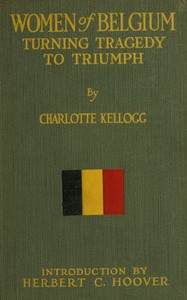
Women of Belgium: Turning Tragedy to Triumph — Edition Insights can be approached with a clearer sense of reading commitment from its source measurements: 35,623 words, 2 hr 35 min estimated reading time, and 31 detected text sections.
The text analysis averages about 22.5 words per sentence, while the detected sections provide another way to judge how the source is divided.
Project Gutenberg metadata also associates the work with “World War, 1914-1918 -- Hospitals,” connecting these edition facts with the source record’s subject description.
Explore this collection
These alternatives are selected using recorded categories and estimated reading time.
About 140 minutes
Social History
32,114 recorded words. 15 minutes difference from this book's estimate.
View Gutenberg source #49515About 177 minutes
Social History
40,663 recorded words. 22 minutes difference from this book's estimate.
View Gutenberg source #68451About 182 minutes
Social History
41,780 recorded words. 27 minutes difference from this book's estimate.
View Gutenberg source #53887Search stored excerpts and compare books → Choose by your preferences →
Choices use stored catalog measurements. Estimates vary with reading speed. A shared category is a catalog label, not a claim that two books have the same argument or literary quality.
Search reads excerpt text stored with this catalog and links to its associated Gutenberg record. The connection is stored in the site database; this tool does not recheck that every excerpt is word-for-word identical to that external record. Excerpt search does not cover every chapter and does not verify historical publication dates.
Catalog snapshot checked: 2026-09-25. Coverage: 91 public books, 91 available source excerpts.
Read the complete public-domain text at its original source.
Read on Project GutenbergCharlotte Kellogg's Women of Belgium: Turning Tragedy to Triumph (1917) opens with an introduction by Herbert Hoover that sets the stage with stark economic data: Belgium, a nation of eight million on an area smaller than Maryland, imported two-thirds of its food before the war. The book itself, however, quickly moves from macro-level statistics to micro-level observation. Kellogg, an American delegate with the Commission for Relief in Belgium, structures her account as a series of titled chapters—'The Soupes,' 'The Cradles on the Meuse,' 'The Bathtub'—that read like dispatches from a relief worker. Her prose is direct, often understated, yet capable of sudden emotional force, as when she describes the 'maddening moments' of doubt that punctuate her days.
Kellogg writes as a participant-observer, but her voice is notably restrained. She rarely editorializes; instead, she lets scenes speak through concrete detail. In 'Gabrielle's Baby,' a Belgian woman asks if merely speaking a relative's name to an American delegate would violate the relief agreement. Kellogg records the question verbatim, then adds only: 'As she stood there—intelligence, distinction speaking from all her person—fearfully putting this pitiful question, I experienced another of those maddening moments we live through in Belgium.' The emotional weight is carried by the contrast between the woman's dignity and the absurdity of her fear. Kellogg's own reactions are implied rather than stated, creating a tension between her role as a neutral relief worker and her human empathy.
The book's structure mirrors the alternating rhythms of relief work: periods of bureaucratic routine punctuated by moments of intense human connection. Chapters like 'The Soupes' describe the systematic organization of feeding stations, while 'The Cradles on the Meuse' focuses on a single infant. The pace quickens in 'Gabrielle's Baby' as Kellogg builds suspense around the fate of an elderly man in occupied France. She describes the weekly 'conference day' when 'all the little white flags rush in from their provinces,' then juxtaposes this with the daily German guard mount—'the white flags and the goose-step—they pretty much sum up the situation!' The sentence is abrupt, almost journalistic, and it closes the scene with a snap. This alternation between measured reportage and sharp, image-driven commentary gives the narrative a distinctive, uneven pulse.
Certain details recur across chapters, creating a web of reference that ties the book together. The 'little white flag' with the red C.R.B. insignia appears repeatedly, first as a symbol of safe passage, then as a marker of the relief effort's visibility. In 'Gabrielle's Baby,' Kellogg notes that 'there were no other cars to be seen' on conference day—only the fifteen white-flagged vehicles. Potato peelings appear in an earlier chapter as a measure of deprivation: girls brought peelings worth up to twenty-eight centimes, but in May 1916 'the potato peelings stopt—they were not having potatoes at home.' Such small, concrete markers accumulate into a portrait of scarcity that is more powerful than any abstract description. Kellogg trusts these recurring images to carry meaning without explicit commentary.
Readers should pay attention to the chapter titles themselves: they are not thematic headings but snapshots of specific places, objects, or people—'The Bathtub,' 'The Green Box,' 'The Little Package.' This naming strategy reflects Kellogg's method of building a larger picture from discrete, tangible pieces. The book does not attempt a comprehensive history of Belgian relief; it offers a series of closely observed moments, and its power lies in the accumulation of such moments rather than in argument or analysis.
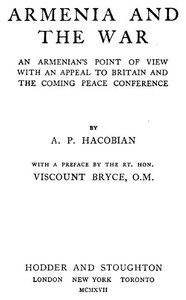
Reading about the C.R.B. cars and the potato-peeling collections, I remembered my grandmother's stories from the Great War, how she’d save every scrap of string. That same quiet ache of distant suffering returned when I first read Armenia and the War — Background and Themes. Both books whisper about ordinary dignity in immense ruin, and I found myself putting each one down, just staring at the wall.
Build a private reading journal entry for this title.