About 182 minutes
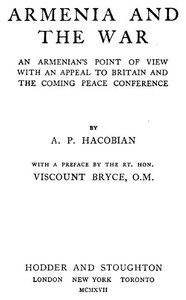
Armenia and the War — Background and Themes
Social History
41,780 recorded words. 5 minutes difference from this book's estimate.
View Gutenberg source #53887
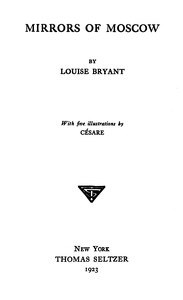
The catalog record for Mirrors of Moscow — Edition Insights provides practical reading context through 40,663 words, 2 hr 57 min estimated reading time, and 4 detected text sections.
The text analysis averages about 20.2 words per sentence, while the detected sections provide another way to judge how the source is divided.
Project Gutenberg metadata also associates the work with “Soviet Union -- History -- Revolution, 1917-1921,” connecting these edition facts with the source record’s subject description.
Explore this collection
These alternatives are selected using recorded categories and estimated reading time.
About 182 minutes
Social History
41,780 recorded words. 5 minutes difference from this book's estimate.
View Gutenberg source #53887About 155 minutes
Social History
35,623 recorded words. 22 minutes difference from this book's estimate.
View Gutenberg source #60599About 140 minutes
Social History
32,114 recorded words. 37 minutes difference from this book's estimate.
View Gutenberg source #49515Search stored excerpts and compare books → Choose by your preferences →
Choices use stored catalog measurements. Estimates vary with reading speed. A shared category is a catalog label, not a claim that two books have the same argument or literary quality.
Search reads excerpt text stored with this catalog and links to its associated Gutenberg record. The connection is stored in the site database; this tool does not recheck that every excerpt is word-for-word identical to that external record. Excerpt search does not cover every chapter and does not verify historical publication dates.
Catalog snapshot checked: 2026-09-25. Coverage: 91 public books, 91 available source excerpts.
Read the complete public-domain text at its original source.
Read on Project GutenbergLouise Bryant opens Mirrors of Moscow with a striking image: revolution as smoke and flame that distorts men into "Promethean supermen." Her stated aim is to show these leaders "as they really are, as I know them in their homes." The foreword immediately establishes a deflationary, intimate approach—Lenin, Trotsky, Kalinin are not demigods but men shaped by events, no different in their "incessant passions, hungers, vanities and fears" from politicians in Washington or London. Bryant insists that the 1917 revolt could have failed, leaving its leaders obscure; greatness, she argues, depends on the event. This framing prepares the reader for a series of biographical sketches that emphasize the ordinary humanity behind revolutionary fame.
The foreword is essential to understanding Bryant's method. She explicitly rejects the heroic or demonic portrayals common in Western reporting, instead promising to show her subjects "in their homes, where the red glare does not penetrate." This domestic focus is not merely anecdotal; it is a deliberate argument about the nature of political leadership. Bryant compares the Russian leaders to Napoleon and Danton, suggesting that revolution creates the appearance of greatness, not the substance. The foreword also notes that Russian public opinion, unlike that in the West, demands "frankness and the unpowdered truth" from its leaders—a claim that justifies her own direct, unvarnished reporting. Readers should keep this preface in mind as they encounter the subsequent chapters, each of which tests Bryant's thesis against a different figure.
The chapter on Michael Kalinin illustrates Bryant's technique of using reported speech to convey character. She describes how Kalinin appeals to peasants with a directness that "comes too close to them, it is like refusing one’s father." The peasants, she writes, "can never resist his appeal." This is not a neutral observation; it positions Kalinin as a figure of genuine connection, not merely a functionary. Bryant also contrasts the peasants' lack of "national pride, as we know it" with their acceptance of socialist formulas like "no annexations, no indemnities." She notes that killing Kalinin would be futile—"Are there not a million Kalinins?"—a claim that ties his personal style to the broader resilience of the Soviet system. The chapter ends by asserting that Kalinin "reflects the new Russia more faithfully than any other Government official," a judgment that readers must weigh against the evidence provided.
Bryant's portrait of Alexandra Kollontai is notably more metaphorical. She compares Kollontai to "a sculptor working on some heroic figure of woman" that keeps "melting back into a heavy, earthy figure of Eve." This image captures the tension between Kollontai's radical vision and the stubborn realities of Russian women's lives. Bryant quotes Kollontai at length, explaining that she is "the only articulate voice of the new order for women" and that her words best reveal her "manner of mind." The chapter includes Kollontai's exhortation: "Cast off your chains! Do not be slaves to religion, to marriage, to children." Yet Bryant also notes that Kollontai's audience is "the women of the factories and the field," grounding the rhetoric in a specific social context. The reader is left to consider whether Kollontai's idealism can survive contact with the "age of steel."
The table of contents reveals a deliberate structure: after a foreword, the book proceeds through a series of biographical chapters, each focused on a single figure or group. The first chapter covers "Lenin and His Subordinates," followed by chapters on the Cheka, Lunacharsky, Kalinin, Kollontai, Trotsky, Enver Pasha, Tikon, Tchicherin, and Litvinov. This sequence moves from the central leadership to more peripheral or specialized figures, suggesting an attempt to map the revolutionary elite. Bryant includes illustrations by Oscar Cesare, which likely reinforce the intimate, observational tone. Readers should note that the excerpts provided are from the foreword and the chapters on Kalinin and Kollontai; the treatment of other figures may differ in style or depth. The book's subtitle, Mirrors of Moscow, implies that each portrait reflects not only the individual but also some aspect of the revolutionary capital.
Bryant's Mirrors of Moscow is best read as a series of character studies rather than a comprehensive history. The foreword provides the key: look for the private, the domestic, the unguarded moment. Pay attention to how Bryant uses direct quotation and anecdote to build her portraits, and consider whether the evidence she presents supports her claim that these leaders are "like other men." The book's value lies in its contemporary perspective—a Western journalist's attempt to see past the smoke of revolution.
That rainy afternoon, I kept returning to Bryant’s scene of Kalinin shelling peas in his kitchen, the revolution momentarily softened. Her trick—finding the human in the historical—stuck with me. Later, almost by accident, I reached for Insurgent Mexico — Reading Companion, and found the same warm, unhurried eye turned toward another country’s upheaval, its people just as vividly, quietly, alive.
Answer a few questions and save a private reflection on this device.