About 307 minutes
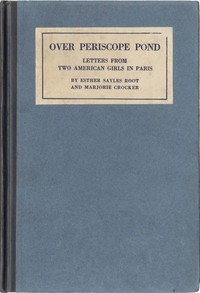
Over Periscope Pond — Inside the Classic
Social History
70,384 recorded words. 39 minutes difference from this book's estimate.
View Gutenberg source #45810
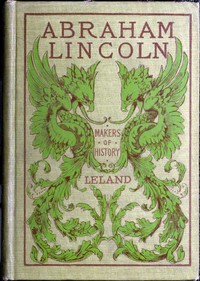
This digital edition of Abraham Lincoln and the Abolition of Slavery in the United States — A Closer Reading is described by source-level measurements including 61,530 words, 4 hr 28 min estimated reading time, and 7 detected text sections.
The text analysis averages about 23.7 words per sentence, while the detected sections provide another way to judge how the source is divided.
Project Gutenberg metadata also associates the work with “Lincoln, Abraham, 1809-1865,” connecting these edition facts with the source record’s subject description.
Explore this collection
These alternatives are selected using recorded categories and estimated reading time.
About 307 minutes
Social History
70,384 recorded words. 39 minutes difference from this book's estimate.
View Gutenberg source #45810About 224 minutes
Social History
51,416 recorded words. 44 minutes difference from this book's estimate.
View Gutenberg source #55876About 220 minutes
Social History
50,434 recorded words. 48 minutes difference from this book's estimate.
View Gutenberg source #49347Search stored excerpts and compare books → Choose by your preferences →
Choices use stored catalog measurements. Estimates vary with reading speed. A shared category is a catalog label, not a claim that two books have the same argument or literary quality.
Search reads excerpt text stored with this catalog and links to its associated Gutenberg record. The connection is stored in the site database; this tool does not recheck that every excerpt is word-for-word identical to that external record. Excerpt search does not cover every chapter and does not verify historical publication dates.
Catalog snapshot checked: 2026-09-25. Coverage: 91 public books, 91 available source excerpts.
Read the complete public-domain text at its original source.
Read on Project GutenbergCharles Godfrey Leland’s 1879 biography of Abraham Lincoln opens with a striking claim: that Lincoln’s presidency was so intertwined with national events that “we cannot decide whether the great picture was enlarged from the smaller one, or the smaller reduced from a greater.” This metaphor of photographic scaling sets the tone for a work that treats Lincoln as both a self-made man and a vessel for historical forces. Leland, known for comic works like Hans Breitmann’s Ballads, writes with a journalist’s eye for contrast—juxtaposing Lincoln’s frontier youth with his wartime command, and praising his patience while excoriating General McClellan’s delays.
Leland’s narrative voice oscillates between two registers. In the preface, he speaks as a moralist, holding up Lincoln as an example of “successful perseverance allied to honesty” for young men. But in the battle passages, he adopts a clipped, almost telegraphic style: “The first day of the battle was in favour of the rebels, but night brought Buell, and the morrow victory, to the Union army.” This shift is most pronounced when he turns to McClellan. Here Leland abandons restraint, calling the general’s correspondence “one of the most painful episodes of the war” and noting that “he wrote more despatches, and General Grant fewer, than any General of the war.” The contrast between Leland’s reverent treatment of Lincoln and his caustic assessment of McClellan suggests a biographer willing to let his own judgments color the historical record.
The book’s rhythm mirrors the war’s own alternation between rapid action and frustrating inertia. Western campaigns are narrated in swift, cumulative sentences: “These great and rapid victories startled the rebels… They gathered together as large an army as possible… the opposing forces fought, April 6th, the battle of Shiloh.” By contrast, the Eastern theater is described through a series of delays—McClellan’s “endless and useless trenches,” his “excuses for inaction,” and the “tangled and wearisome correspondence” with Lincoln. Leland uses this structural contrast to imply a moral geography: the West is the site of decisive action, the East of political maneuvering. The reader feels the impatience that Lincoln himself must have felt.
Leland repeatedly credits Lincoln with military insight, a claim that departs from more conventional portraits of the president as a reluctant commander. He writes that in the McClellan correspondence, Lincoln “displays not only the greatest patience under the most tormenting contradictions, but also shows a military genius and a clear intelligence of what should be done.” This is not merely praise; it is a specific argument about Lincoln’s role. Leland supports it by noting that Lincoln urged McClellan to advance on Richmond after Antietam, and that the president “set forth with great clearness the conditions of the military problem.” The biography thus positions Lincoln as an active strategist, not a passive figurehead—a view that aligns with Leland’s broader theme of a leader who “governed so great a country so thoroughly in detail.”
Readers should note that Leland wrote this biography while living abroad, relying on secondary sources such as Lamon, Raymond, and Holland. The publisher’s note acknowledges “a few errors in dates and proper names” in the first edition. This distance may explain the book’s occasional reliance on vivid set pieces rather than archival detail. For those interested in how Lincoln was remembered in the decades after his death—and how a popular writer shaped that memory—this volume offers a revealing portrait of the president as seen through the lens of 1879.
There’s a moment in Leland’s book where the pacing slows, and you feel him simply sitting with Lincoln’s weariness. I remember that same unhurried intimacy, oddly enough, while turning the pages of Over Periscope Pond — Inside the Classic. It’s that quiet feeling of watching someone think, on the page, long after the noise of the story has passed.
Use these questions to collect your thoughts before moving on.