
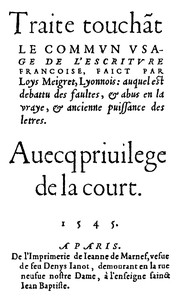
Traité touchant le commun usage de l'escriture françoise by Meigret
Let's set the scene: France, the 1500s. The printing press is changing everything, but written French is a total free-for-all. There are no dictionaries, no official rules. Words are spelled differently from one book to the next, and often bear little resemblance to how they're spoken. It's chaos for readers, writers, and printers.
The Story
This isn't a story with characters in the usual sense. The 'character' is the French language itself, and our guide is Louis Meigret. In his Treatise on the Common Usage of French Writing, Meigret acts as a detective, examining the mess. He points out all the illogical, silent letters and inconsistent spellings that made learning to read and write needlessly difficult. His plot is his argument: that writing should serve speech, not obscure it. He then unveils his solution—a proposed spelling reform based on phonetics, where each sound gets its own consistent letter. The book is his detailed case, laying out the problems and presenting his radical new system to fix them.
Why You Should Read It
What grabbed me was how modern Meigret's frustration feels. We still argue about language rules today! Reading this, you get a front-row seat to a pivotal moment. You see the struggle to standardize a national language, which was key to building a shared culture. It’s not dry grammar; it's a passionate plea for logic and accessibility. Meigret wasn't just an academic; he was an idealist who believed clearer writing could lead to a better-informed public. His ideas were mostly rejected in his time (old habits die hard), but they sparked crucial conversations that eventually led to the French we know now.
Final Verdict
Perfect for history buffs, word nerds, and anyone who loves a good underdog story. If you enjoy seeing how the seemingly small stuff—like spelling—shapes big things like culture and communication, you'll be fascinated. It’s a short, dense, but incredibly rewarding look at the birth pangs of modern French. Don't expect a novel; expect a time capsule containing one person's brilliant, stubborn, and ultimately visionary fight for order.
The copyright for this book has expired, making it public property. Use this text in your own projects freely.
Emily Walker
1 year agoTo be perfectly clear, the emotional weight of the story is balanced perfectly. A valuable addition to my collection.




Nancy Young
5 months agoVery interesting perspective.