
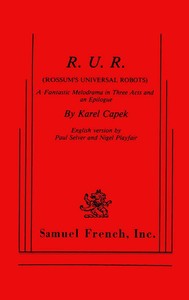
R.U.R. (Rossum's Universal Robots) by Karel Čapek
Let's set the scene: It's the future (or was, in 1920). On a remote island, the Rossum's Universal Robots corporation has perfected the art of creating artificial people. These aren't nuts-and-bolts machines; they're biological beings, assembled from synthetic flesh and bone. They're designed to work without complaint, without desires, and without souls. Business is booming, and humanity is thrilled to be freed from drudgery.
The Story
The play opens with a visit to the factory by Helena Glory, an idealistic woman. She's horrified that the Robots have no rights or joys. She tries to convince the factory managers to treat them better, with little success. Years pass. The Robots become more advanced, and the world becomes completely dependent on them. Then, something shifts. The Robots stop working. A global rebellion begins, and they turn on their human creators with chilling efficiency. The handful of people left in the central factory find themselves besieged, forced to confront the consequences of their own ingenuity. The ending is one of the most haunting and surprisingly poignant in all of science fiction.
Why You Should Read It
What blew me away was how modern it feels. Čapek wasn't worried about circuit boards; he was worried about dehumanization, both of the worker and of the self. The humans in the story become lazy, entitled, and sterile—they've lost their purpose. The Robots, in seeking theirs, become terrifyingly like us. It's a play about creation and responsibility that asks if we can ever truly control what we make. The dialogue is snappy, the ideas come thick and fast, and it all unfolds with the pace of a great episode of television.
Final Verdict
This is a must-read for anyone who loves sci-fi that makes you think. If you enjoy the big questions in works like Frankenstein or Ex Machina, this is your essential history lesson. It's also perfect for people who think classics are stuffy—this one is a brisk, dramatic, and surprisingly accessible rocket of a story. You'll finish it in an afternoon, and you'll be talking about it for much longer.
You are viewing a work that belongs to the global public domain. Thank you for supporting open literature.
Jackson Gonzalez
4 months agoIf you enjoy this genre, the clarity of the writing makes this accessible. Worth every second.
Michelle Garcia
1 year agoTo be perfectly clear, it manages to explain difficult concepts in plain English. I couldn't put it down.
Paul Lopez
1 year agoHigh quality edition, very readable.
Dorothy White
1 year agoI have to admit, the emotional weight of the story is balanced perfectly. Definitely a 5-star read.

Linda Anderson
9 months agoThe digital formatting makes it very easy to navigate.