
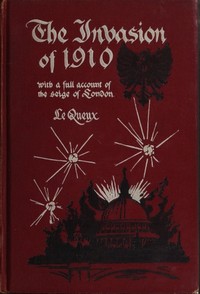
The Invasion of 1910, with a full account of the siege of London by Le Queux
The Invasion of 1910 isn’t just a book—it’s a piece of panic in print. William Le Queux wrote it in 1906 when worries about Germany were white hot. The premise? Germany sneaks in a massive invasion force, catching sleepy Britain napping. The book follows scattered civilians, soldiers, and officials as the enemy rampages toward London. At almost 500 pages, you get the full catastrophe: street fights, refugees fleeing, and a terrifying occupation looming.
The Story
Picture an alternate 1910 where British intelligence nods off. Thousands of German troops flood in through several points, and the home army – totally unprepared – starts taking hits. The main character isn’t one hero; it’s really the whole nation. You get chapters from MPs panicking, newspapermen grabbing scoops, and sappers (essentially army engineers) setting up barricades. One big chunk focuses on the Siege of London: the horrific urban warfare in streets you’d recognize, like the Strand or Waterloo. Spies cut phone lines, airships drop explosives, and every chapter feels like you’re one step behind disaster.
Why You Should Read It
Honestly, it feels two ways: pulpy and prophetic. Le Queux was a nervous fearmonger with lots of Germany-as-bogeyman details, but that’s half the fun. You zoom through invasion lists and war council meetings – weirdly exciting. But a real reward is seeing how earlier generations thought about war, patriotism, and spying. Le Queux scatters one cool gadget or spy trick per chapter, like making scouts use mail trains for messages. Yes, some sentiment feels preachy (“Why aren’t we more prepared?!” gets repeated a lot). But as a romp? It moves.
Final Verdict
This is made for history nerds, steampunk fans, and anyone who likes their disaster novels with a side of antique paranoia. If you can stomach heroic Victorian attitudes (“We’ll grind those Germans, God save the King”), you’ll relish the nonstop action. Not for patient realism-lovers; the storytelling is as wooden and formal as an invasion plan. But close the book, you’ll smile thinking: “Imagine if someone wrote THE INVASION OF 2030 NEXT TUESDAY.” Still strangely relevant. 4 out of 5 fear-o-meter stars. Go borrow it from Archive.org and get jolted.
Legal analysis indicates this work is in the public domain. You can copy, modify, and distribute it freely.
Charles Martinez
1 year agoHaving read the author's previous works, the critical analysis of current industry standards is very timely. This has become my go-to guide for this specific topic.
Ashley Thomas
10 months agoInitially, I was looking for a specific answer, but the wealth of information provided exceeds the average market standard. It’s hard to find this much value in a single source these days.






Karen Hernandez
1 month agoGiven the current trends in this field, the evidence-based approach makes it a very credible source of information. I'm genuinely impressed by the quality of this digital edition.