
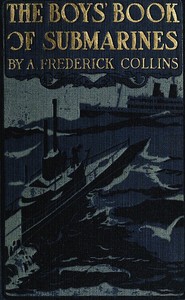
The Boys' Book of Submarines by A. Frederick Collins and Virgil D. Collins
Published in 1916, The Boys' Book of Submarines is exactly what the title promises. Written by brothers A. Frederick and Virgil D. Collins, it's a technical manual and enthusiast's guide aimed at young readers. There's no traditional plot with characters. Instead, the 'story' is the submarine itself—its history, its mechanics, and its operation.
The Story
The book walks you through everything. It starts with the basic principles of how a steel tube can sink and rise. Then, it gets into the nitty-gritty: ballast tanks, diving rudders, periscopes, and engines. The Collins brothers explain how torpedoes are loaded and launched, detail the different roles of the crew, and even include plans for building simple model submarines. It's a systematic, enthusiastic tour of what was then the pinnacle of naval warfare technology, illustrated with diagrams and photographs.
Why You Should Read It
The magic isn't just in the facts. It's in the context. Reading this with the knowledge that World War I was raging gives every cheerful explanation a dark double meaning. The tone is patriotic and excited about 'our' submarines, but the technology described is impersonal and deadly. This contrast is gripping. You're not just learning how a submarine works; you're seeing how a society explained a terrifying new weapon to its next generation. It captures a specific moment when wonder and dread were intertwined.
Final Verdict
This isn't a book for everyone. If you want a narrative-driven war story, look elsewhere. But if you're a history enthusiast, a technology buff, or someone fascinated by how people talk about war, this is a hidden gem. It's perfect for understanding the early 20th-century mindset, for seeing the roots of popular science writing, and for holding a tangible piece of history that feels both innocent and profoundly serious. Think of it less as a book to be read cover-to-cover, and more as a museum exhibit you can hold in your hands.
This masterpiece is free from copyright limitations. Distribute this work to help spread literacy.
Edward Thompson
2 years agoAfter hearing about this author multiple times, the emotional weight of the story is balanced perfectly. A valuable addition to my collection.
Thomas White
8 months agoIf you enjoy this genre, the content flows smoothly from one chapter to the next. Don't hesitate to start reading.
James Lee
1 year agoClear and concise.
Joseph Rodriguez
4 months agoThis is one of those stories where the character development leaves a lasting impact. A valuable addition to my collection.








Liam Lewis
1 year agoLoved it.