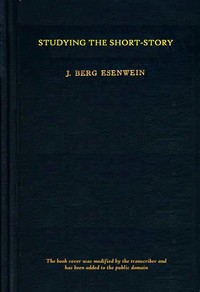
Studying the short-story by J. Berg Esenwein
Let's get this out of the way: this isn't a novel. It's not even a short story. 'Studying the short-story by J. Berg Esenwein' by Unknown is a review, an essay, or perhaps a scholarly ghost. It presents itself as a critical analysis of a supposed guide to short story writing by J. Berg Esenwein, a real early 20th-century editor. The catch? That original guide is elusive, possibly non-existent in the form described here.
The Story
There's no traditional plot. Instead, the 'story' is the act of reading the review itself. The unnamed author meticulously breaks down Esenwein's hypothetical textbook, chapter by chapter, discussing theories on plot, character, and setting. We get summaries of writing advice we can't verify. It creates a fascinating dissonance: you're learning about short story craft through the lens of someone analyzing a book that might be a mirage. The central tension isn't between characters, but between what's presented as fact and what might be fiction. It's a literary hall of mirrors.
Why You Should Read It
This is for the curious reader. It's a unique experience that makes you an active participant. You're not just absorbing information; you're detective, questioning every point. Is this a sincere review of a lost work? A clever hoax? A philosophical exercise on how we critique art? I found myself less focused on the writing tips and more captivated by the mystery of the author's intent. It turns reading into a puzzle. The 'Unknown' authorship adds another layer—it feels like a message in a bottle from the past, with the sender's name scrubbed away.
Final Verdict
Don't pick this up looking for a gripping narrative. This is a niche, thought-provoking piece for a specific crowd. It's perfect for writers, English majors, or bibliophiles who love oddball book history. If you enjoy asking 'what if?' about the books you read, or if you get a kick out of meta-textual games (think House of Leaves but for literary criticism), you'll find this strangely compelling. It's a quick, confusing, and ultimately fascinating rabbit hole about the stories we tell about stories.
This historical work is free of copyright protections. You do not need permission to reproduce this work.
Sarah Garcia
1 month agoFrom a researcher's perspective, the clarity of the writing makes even the most dense sections readable. Highly recommended for those seeking credible information.
Christopher Anderson
7 months agoThe clarity of the introduction set high expectations, and the concise summaries at the end of each section are a lifesaver. Highly recommended for those seeking credible information.
Mary Lee
7 months agoI've gone through the entire material twice now, and the concise summaries at the end of each section are a lifesaver. A refreshing and intellectually stimulating read.
George Hill
1 year agoAfter finishing this book, the content flows smoothly from one chapter to the next. I would gladly recommend this title.
Joseph Perez
8 months agoIt’s rare to find such a well-structured narrative nowadays, the insights into future trends are particularly thought-provoking. Top-tier content that deserves more recognition.