
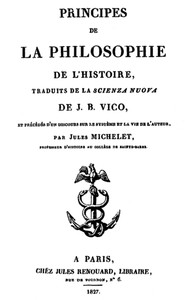
Principes de la Philosophie de l'Histoire by Giambattista Vico
Let's be honest: the title 'Principles of the Philosophy of History' sounds like homework. But this book is anything but dry. Giambattista Vico, an Italian thinker writing long before our modern ideas of history, had a radical thought. He believed human history wasn't random or just a straight line of progress. Instead, he saw it as a series of cycles, or 'corsi e ricorsi'.
The Story
Vico lays out his theory that all nations go through three distinct ages. First comes the Age of Gods, where people explain the world through myths and fear of the divine. Next is the Age of Heroes, ruled by strongmen and aristocratic classes, with laws that favor the powerful. Finally, there's the Age of Men, where reason and democracy (of a sort) flourish, but society can become cynical and fragile. The twist? After this human age collapses into what Vico called a 'barbarism of reflection,' the cycle starts all over again. The 'plot' is watching him use examples from ancient history to prove this pattern is universal.
Why You Should Read It
Reading Vico feels like getting a secret key. It's thrilling to see someone from 300 years ago challenge the idea that his own time was the peak of civilization. His focus on how societies create their own reality—through language, law, and myth—feels incredibly modern. You start seeing echoes of his 'heroic age' in our politics or his 'human age' in our debates. It’s less about memorizing dates and more about getting a new lens to look at the news, or even your own community's story.
Final Verdict
This is not a breezy beach read. It requires some patience. But if you're the kind of person who loves big, provocative ideas about why the world works the way it does, it's perfect. Think of it as the original 'big history' book. It's for the curious reader who enjoys philosophy, wonders about the patterns in today's headlines, and doesn't mind a challenging, rewarding book that will stick with you long after you finish the last page.
This title is part of the public domain archive. It is now common property for all to enjoy.
Carol Allen
1 year agoI was skeptical at first, but the clarity of the writing makes this accessible. Highly recommended.
James Lopez
8 months agoMy professor recommended this, and I see why.
Dorothy White
9 months agoThis is one of those stories where the emotional weight of the story is balanced perfectly. Don't hesitate to start reading.
Charles Rodriguez
1 year agoAs someone who reads a lot, the author's voice is distinct and makes complex topics easy to digest. I will read more from this author.



John Moore
10 months agoWithout a doubt, the author's voice is distinct and makes complex topics easy to digest. I would gladly recommend this title.