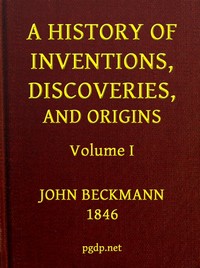
A History of Inventions, Discoveries, and Origins, Volume 1 (of 2) by Beckmann
Johann Beckmann's book isn't a novel, but it's full of stories. Published in the late 1700s, it's his attempt to create a new field of study he called 'technology'—the history of how we make and do things. Instead of writing about kings and battles, he focused on the objects and ideas that changed daily life.
The Story
Think of this book as a series of fascinating detective stories. Each chapter investigates a different item. Beckmann acts like a historical reporter, digging up old texts, letters, and travelogues to trace an invention's journey. He follows the winding path of coffee from Ethiopian legend to European coffeehouse craze. He looks at how simple things like the candlewick or the fishing hook evolved over centuries. The 'plot' is the struggle of each new idea to be accepted, improved upon, and become ordinary. You see brilliant insights, but also silly mistakes, fierce rivalries, and pure chance shaping the world.
Why You Should Read It
This book makes you see the modern world with new eyes. Every time you sip coffee or glance at a clock, you'll think of the long, strange trip that brought it to you. Beckmann’s voice is surprisingly modern—curious, skeptical, and sometimes amused by human nature. He shows that progress is rarely a straight line from one genius to the next. It's a messy collaboration across time and cultures. Reading it feels like having a brilliant, slightly eccentric guide pointing out the secret history of everything around you.
Final Verdict
Perfect for curious minds who love 'how things work' shows or podcasts like 99% Invisible. It's for readers who enjoy history but want a break from politics and war. If you've ever looked at a mundane object and wondered, 'How did someone first think of that?'—this is your book. Be warned: it's an older text, so the language can feel formal at times, but the wonder inside is timeless. It’s a slow, rewarding read best enjoyed a few chapters at a time, like a box of rich intellectual chocolates.
There are no legal restrictions on this material. You do not need permission to reproduce this work.